Donnerstag, 14. April 2016

Highlights Global Venture Capital Investment Trends 1Q. 2016 mit Fokus Digital Health Care


DerVenture Pulse Q1 2016 Report von KPMG zeigt die akutellen Trends im Bereich Venture Capital Investments


 Zusammenfassung

- Reduktion dealflows und investment  im 1 Quartal 2016  - ähnlich wie Börsenverläufe globally
- Korrektur der meinerseits "magisch überzogenen" Unicorns Bewertungen überschattet die ganze Branche
- Back to  work : performance over possibilities kommt wieder in Mode
- Corporate participation ist stabil und wird stärker
- health care Anteil stabil und weiterhin größte Gruppe und allen  VC  Investments
- digital health care : höchstes Investment in 5 aufeinander folgenden Quartalen

" Over the next few quarters, digital health investments will continue to expand and evolve"


Source : KPMG , CBInsights


Anhang :  Historische VC Investment Enwicklung 2007 - 2015


Mittwoch, 13. April 2016

Mentoring program for Your Digital Health Startup

Grants4Apps®
Grants4Apps®
The Grants4Apps® Accelerator is a mentoring program for digital health startups taking place in Berlin. This year's batch with five startups runs from August until December. The program offers mentoring by entrepreneurs and Bayer experts, office space for 100 days, and funding of 50,000€.
Grants4Apps® Accelerator is focused more this year on projects related to our therapeutic areas, such as Women's Health, Cardiology, Ophthalmology, Hematology, Oncology, or Radiology. However Grants4Apps® is also open to highly innovative digital health software or hardware projects dealing with patient engagement, prevention, patient compliance, clinical trials, awareness or management of clinical conditions.
Submit your application until May 31st, 2016.
If you are accepted into the program, the founders and key members of your team are expected to stay in Berlin for the duration of the Accelerator program: Mid August till the first days of December, 2016. No exceptions. Between Mid June and Mid August you will have to look for housing, move to Berlin and sign the funding contract.
Which requirements are there for participation in the program?
It's a residential program. At least 3 members of your team have to be in Berlin the whole duration of the program (Mid August till the first days of December 2016). The founders and key members must be in Berlin. No exceptions. All team members must be proficient in English.
Source and  further information and to apply, please visit:
http://www.grants4apps.com

Mittwoch, 17. Februar 2016

Thinking about joining one of the new health tech accelerators ?

#StartUpService :

In the last time a couple new health tech accelerators launched .

Check  the profiles :

Pfizer  health tech accelerator , 6 months , San Francisco , workspace/mentorship/networking
Focus : sleep, stress management, energy, aging, and nutrition.


 T-Hub health tech innovation accelerator  ( in cooperation with Merck and Microsoft ) , Hyderabad , mentorship/investment,  
 Focus: technology-enabled startups for health care

TMCx by Texas Medcal Center Innovation Institute, 4 months


Digital Health Accelerator by University City Science Center, Philadelphia, 12 months , investment $50k

Mittwoch, 3. Februar 2016

eHealth Funding US: 2015 Year in Review

Source : RockHealth.com

Remarks BB :   
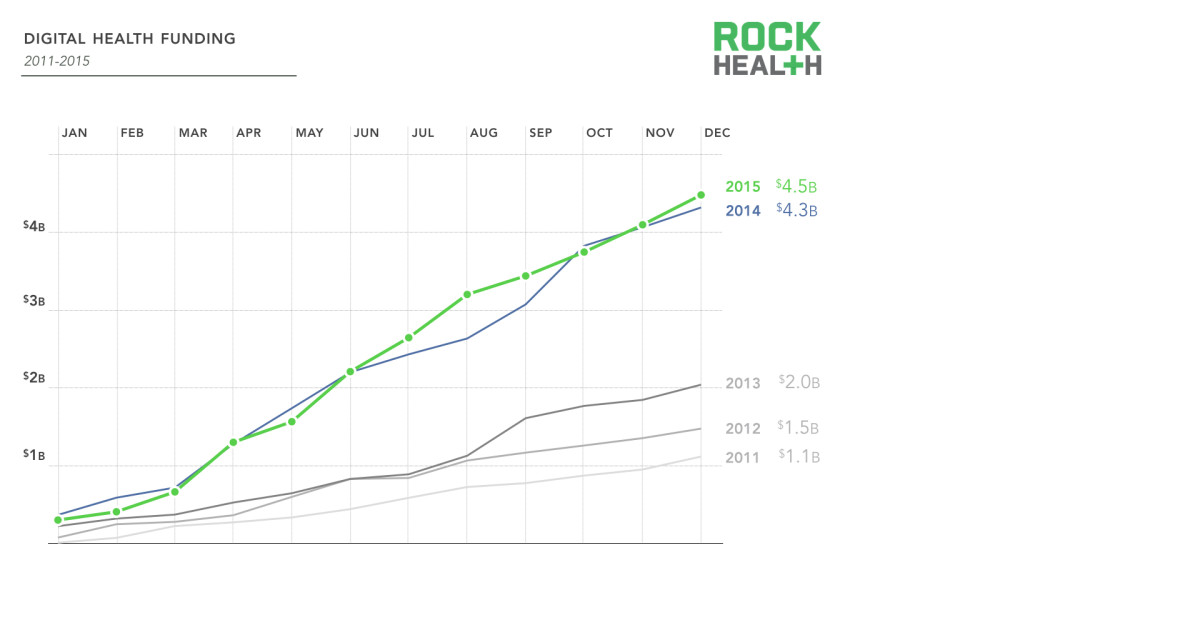
Total Investment : $ 4,5 Bil, passing 2014
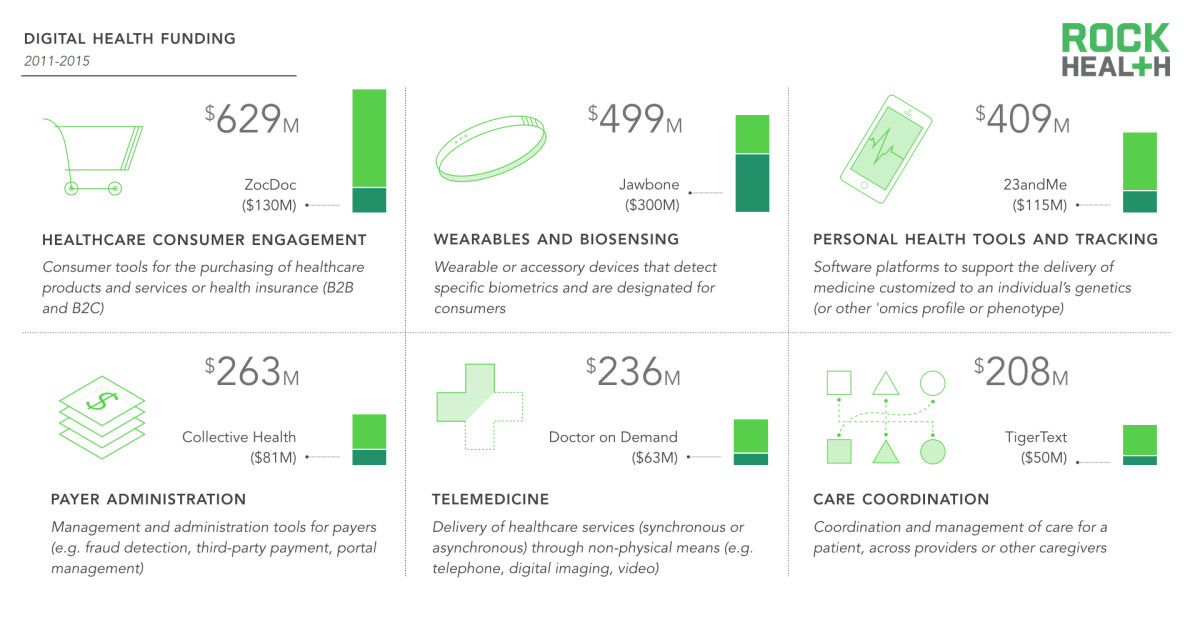
The biggest 6 market sectors : Healthcare Consumer Engagement ; Wearables &Sensors ; Personal Health&Tracking Tools ; Payer Administation ; Telemedicine ; Care Coordination

2015 was another year of big numbers for digital health—the year closed out with over $4.5B in funding flooding into the space, a sizable increase in the number of later stage rounds, and 187 M&A deals.
With 2014 breaking all records, we entered 2015 wondering if digital health funding would
be able to keep pace. To our pleasant surprise, digital health saw $4.5B in total venture funding, ending the year slightly above 2014’s $4.3B mark. While skeptics may question
the attractiveness of digital health as an industry, it’s important to keep in perspective what an incredible feat it was for 2015 to be on pace with 2014.
Last year, records were not just broken—they were doubled. But digital health continues to account for a healthy 7% of total venture funding. The steady amount of funding should calm any concerns of a bubble. Digital health is no longer a novelty as well. We’re seeing company growth, with late stage deals accounting for almost a quarter of all deal volume.
And exits abound—2015 was a record year for industry consolidation, and digital health was no exception. M&A activity nearly doubled in volume with 187 deals and $6B in disclosed activity. Public markets remain a viable exit opportunity with $1.4B raised in five IPOs this year, to create $8B in market capitalization.
Perhaps the largest theme of 2015 was an increased focus on the consumerization of healthcare. The healthcare consumer engagement and personal health tools and tracking categories alone account for 23% of overall funding. As we look to 2016, we are optimistic and excited about the growing role of the consumer and the consequent B2C opportunities.

Source: Rock Health Funding Database
Note: Only includes U.S. deals >$2M; data through December 8, 2015
2015 saw steady funding throughout the year, closing out right above 2014 and reaching the $4.5B mark. With yet another year of ample funding, compound annual growth (CAGR) from 2011-2015 was 32%.
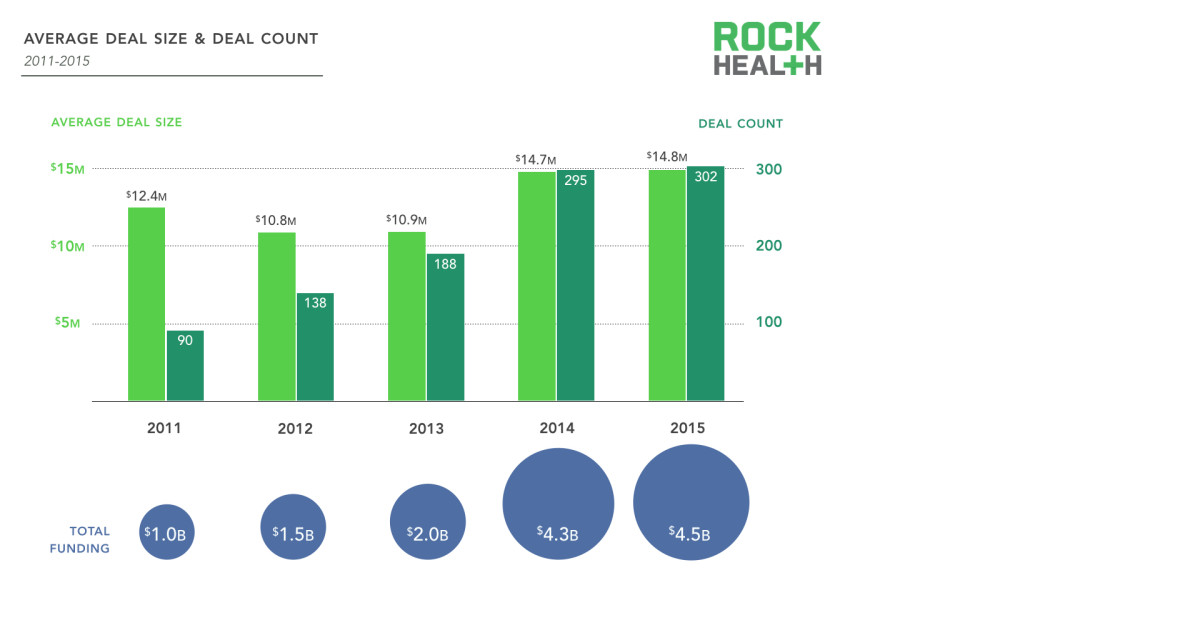
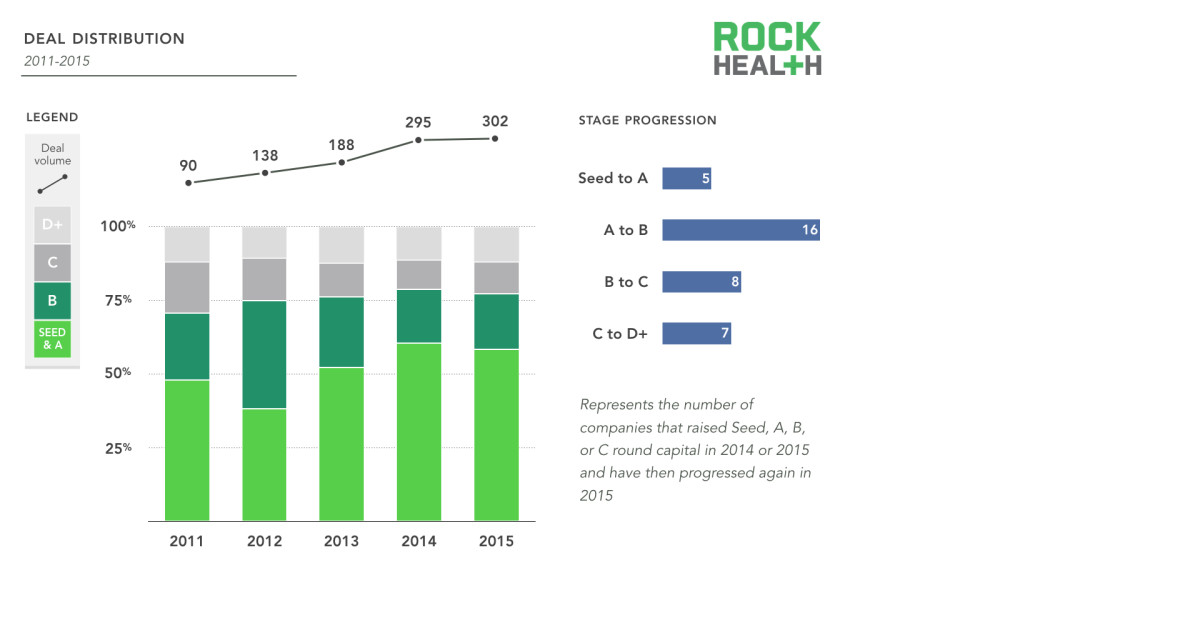
The year started off slightly slower, but quickly picked up steam in the second quarter, which is when the largest amount of deals and largest average deal size took place. The year closed out with 302 deals and an average of $14.8M.


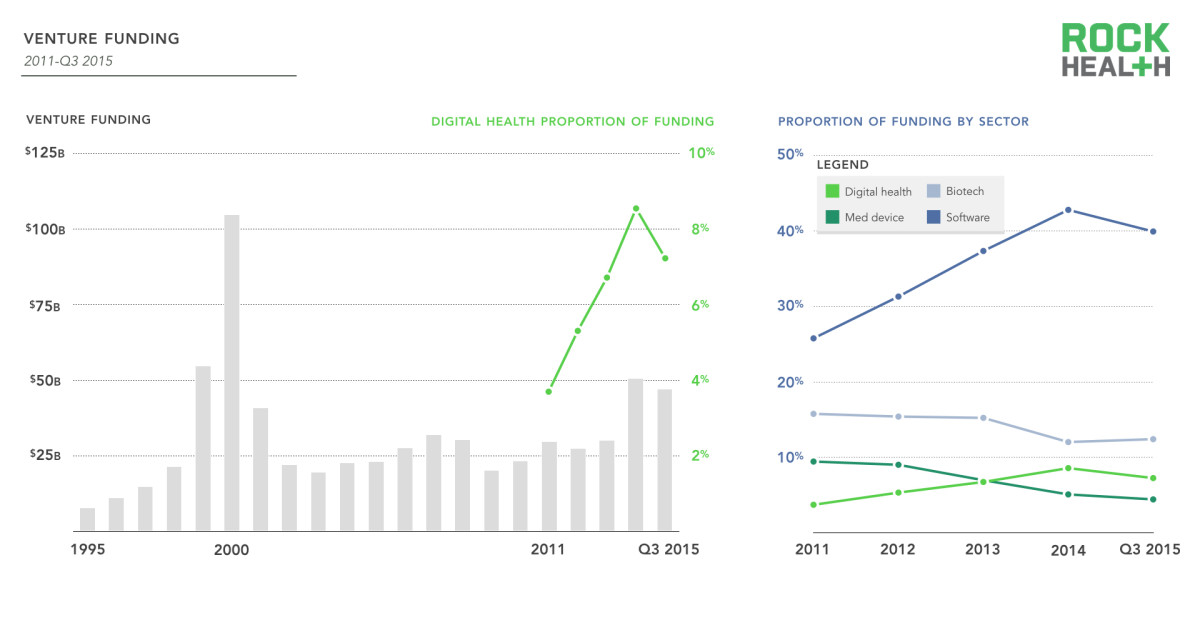
Digital health continues to receive strong investor attention, accounting for 7% of total venture funding.


Source: PwC MoneyTree (latest available is through Q3 only); digital health data based on Rock Health data
Note: Digital health only includes U.S. deals >$2M 


Where overall venture funding showed a slight dip in 2015, digital health continues to hold a health 7% of total venture funding and took a less significant dropoff than other sectors, such as software and medical devices.


Both average deal size and total number of deals in 2015 closely mirrored 2014, with just a small increase in average deal size and a handful more deals.


Source: Rock Health Funding Database
Note: Only includes U.S. deals >$2M; data through December 8, 2015
In 2014, there was a sharp increase in both number of deals and average deal size, up 56% and 35% respectively. However, 2015 only saw a small increase in the total number of deals and average deal size.
Digital health companies showed growth internally as well with the average number of employees increasing from 44 to 50 over the course of the past year, which is also a significant bump from an average 40 employees in 2013.


Digital health deal volume was relatively flat from 2014. However, 2015 the greatest number of late stage deals Series C and beyond thus far.


Source: Rock Health Funding Database
Note: Only includes U.S. deals >$2M; stage progression excludes bridge rounds; data through December 8, 2015
In 2015, Seed and Series A deals continued to account for the majority of deals. Series C and later stage deals represented 23% of all deal volume.
Thirty-seven companies that closed a deal in 2014 raised at least one more round in 2015. Collective Health and ClassPass each closed early stage deals in 2014, Series A and Seed & Series A respectively, and then Series B and C rounds in 2015. Peloton Interactive raised a Series B in 2014 and followed on with a Series C and Growth/PE round in 2015.


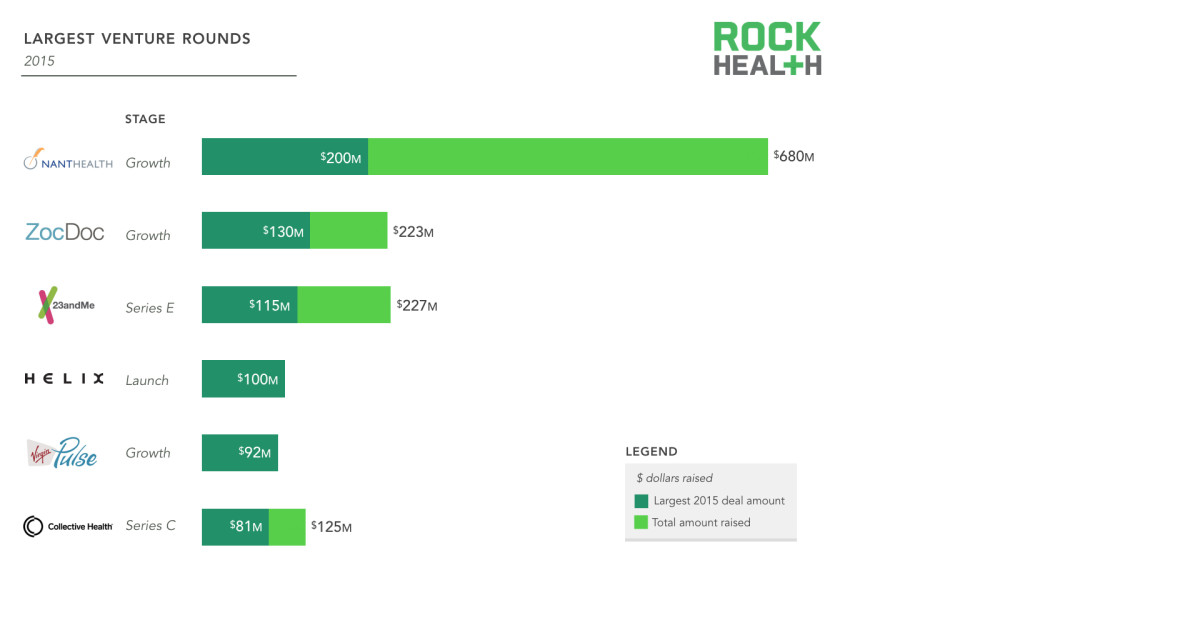
The six largest deals of the year totaled to nearly three quarters of a billion, representing 16% of all 2015 funding.


Source: Rock Health Funding Database
Note: Only includes U.S. deals >$2M; data through December 8, 2015
NantHealth closed the largest deal of the year with $200M in new funding, bringing its total amount raised to date to an impressive $680M.
Two of the six largest deals were won by consumer-driven genetic companies, 23andMe and Helix. With genetic services adoption only at 7% this year, investors are betting big that there will be continued growth and uptake by consumers to engage in their health via genetic products and services.


The top six categories accounted for 50% of all digital health funding in 2015, with payer administration entering the rankings for the first time.


Source: Rock Health Funding Database
Note: Only includes U.S. deals >$2M; data through December 8, 2015


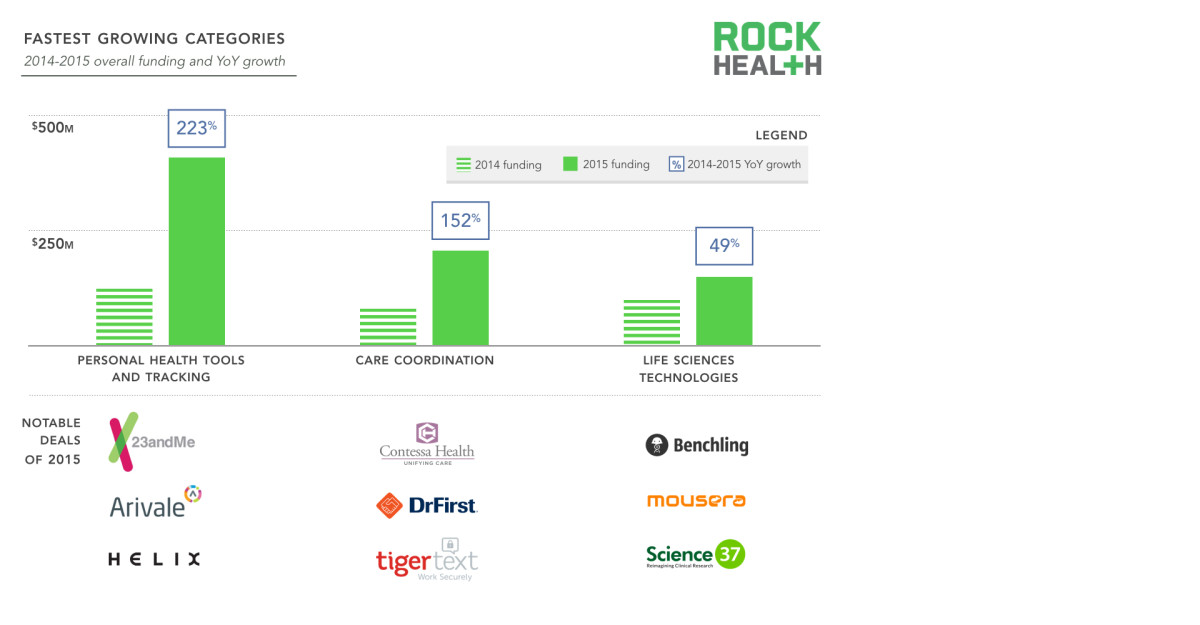
High growth categories of 2015 reflect the shifting industry needs to cut costs, engage with the end-user, and improve communication and coordination.


Source: Rock Health Funding Database
Note: Only includes U.S. deals >$2M; data through December 8, 2015
Aided by huge investments in consumer-driven genetic companies, funding in the personal health tools and tracking category totaled more than that in the care coordination and life sciences categories combined. This reflects the growing emphasis on and importance of creating a consumer-centric world for healthcare.
Care coordination companies offer not only solutions for more streamlined workflows, but also improvements to patient experience. Tools for life sciences experienced significant growth as biopharma continues to struggle with price pressures and the need to accelerate drug development processes.


Investors


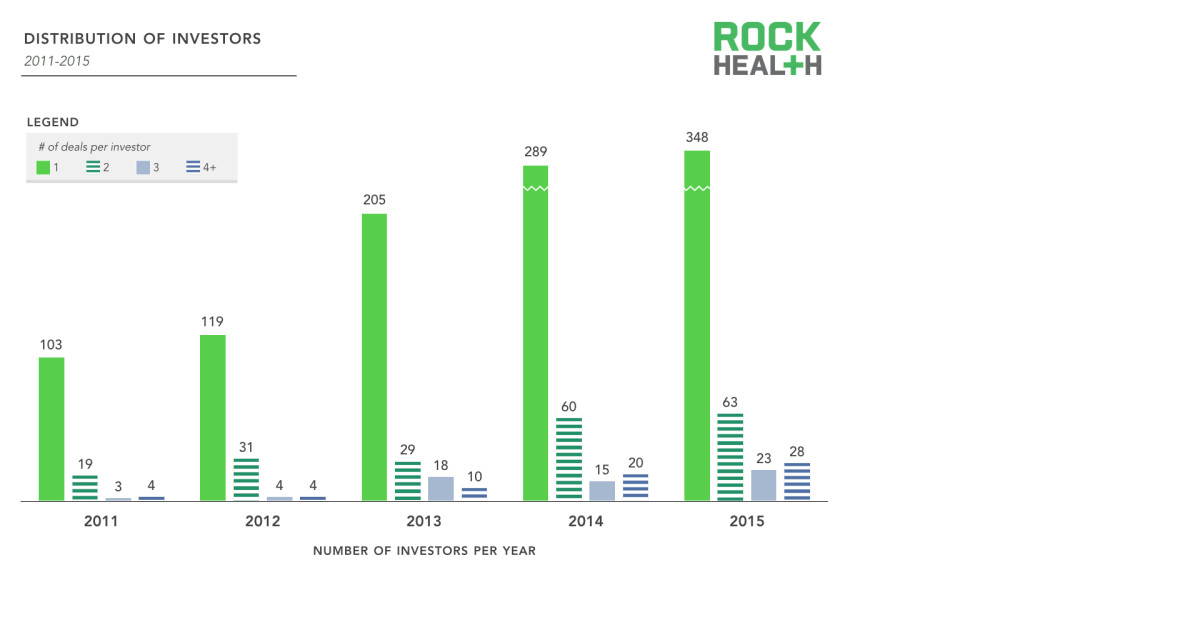
Investors who were most active in 2014 continue to invest in digital health in 2015, with 51 firms closing three or more deals.


Source: Rock Health Funding Database
Note: Only includes U.S. deals >$2M; data through December 8, 2015
The industry continued to see an increasing number of dabblers investing in digital health with 336 venture firms investing in one deal each this year. There was a growing long tail of investors who have done three or more deals, up 40% from last year to 49 unique investors. Moreover, there was a significant increase from 15 to 25 investors that completed three digital health deals each.
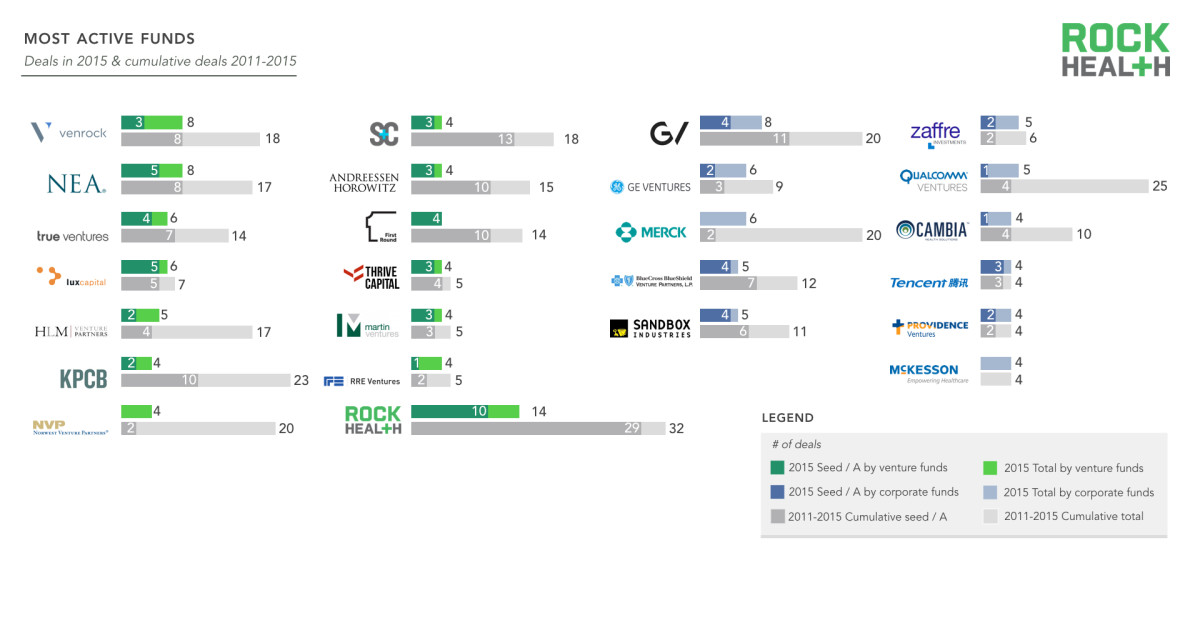
One fifth of the investors who have done ten or more deals since 2011 are strategic / corporate funds. The most active investors of 2014 (those who participated in four or more deals) continued to invest in at least one digital health company in 2015.


Digital health continues to receive funding from a wide range of funds with a noticeable growth in the number of active corporate investors.


Source: Rock Health Funding Database
Note: Only includes U.S. deals >$2M; data through December 8, 2015
Since 2011, there have been a total of 24 investors who have done 10 or more deals. All 24 investors did at least one deal in both 2014 and 2015.


Geographies

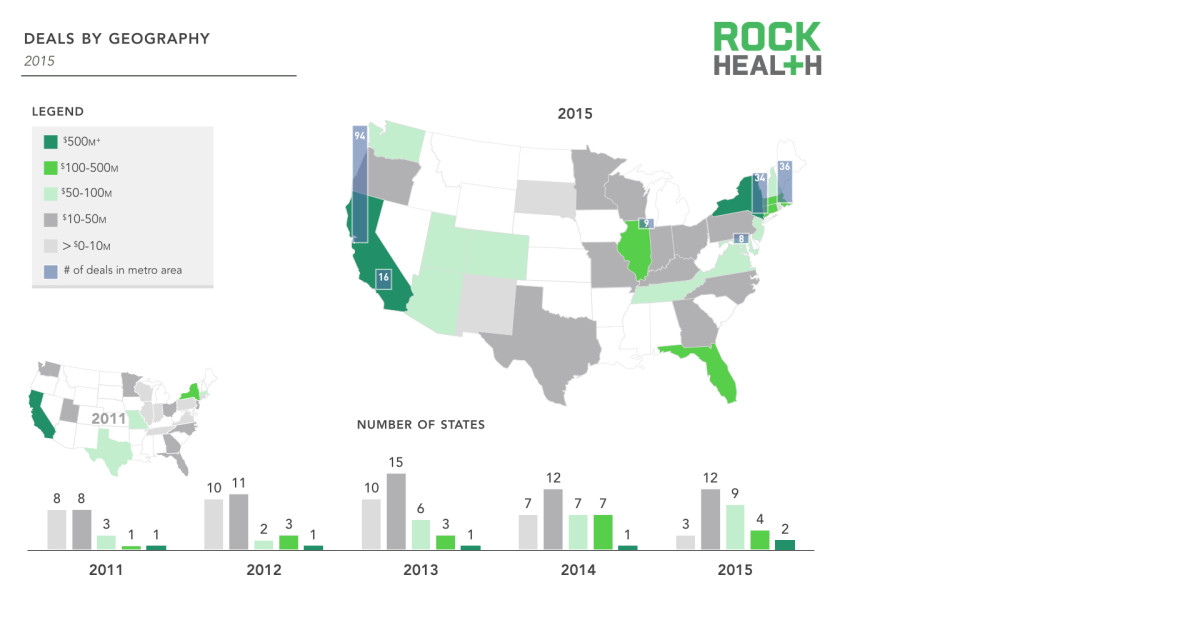
Digital health companies headquartered in California continue to garner the majority of funding, with Bay Area-based companies accounting for 36% of overall digital health investments.


Source: Rock Health Funding Database
Note: Only includes U.S. deals >$2M; data through December 8, 2015
Digital health companies from 30 states received funding this year, with New York finally joining California as home to companies accounting for over $500M in deals.
Boston beat out New York City ever so slightly to claim the title of second largest digital health hub, but both should watch out as digital health continues to heat up in the metro areas of Miami, Salt Lake, Orlando, and Denver; each home to companies that brought in more than $65M.


Exits and public markets

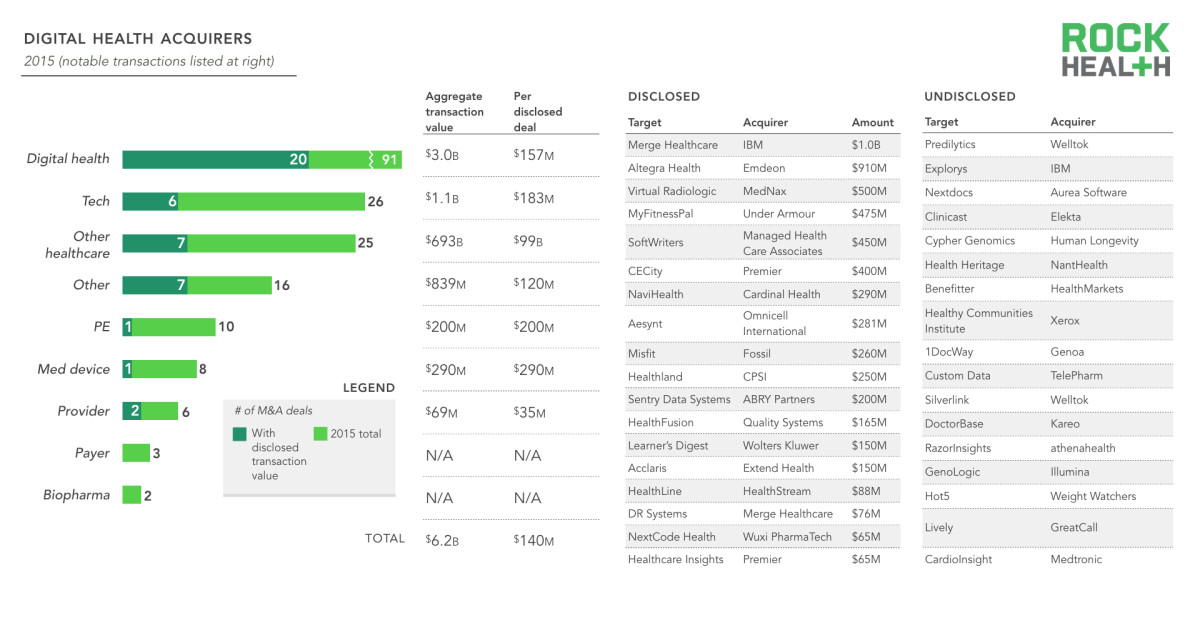
We tracked 187 M&A deals throughout 2015, nearly doubling in transaction volume from 2014.


Source: Rock Health tracking and analysis based on news reports
Note: M&A transactions totals and lists are not meant to be comprehensive; deals through December 8, 2015
2015 was a year of massive consolidation across the healthcare industry, whether payer, provider, pharma, or digital health. With over $6B in disclosed transactions and averaging $140M per disclosed deal.
A select group of categories proved particularly appealing to acquirers. For example, 34 EHR and clinical workflow companies were acquired in 2015, up from six in 2014.


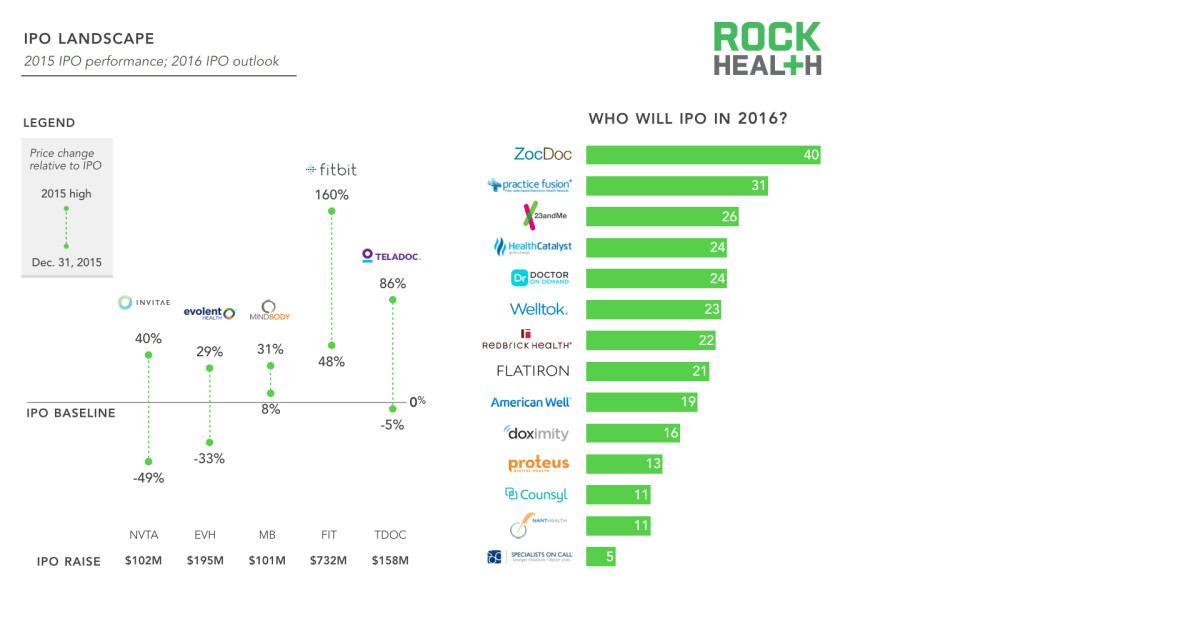
Five digital health companies went public in 2015, with two companies trading above their IPO price.


Source: 2015 performance from NASDAQ and Google Finance as of market close on December 8, 2015; 2016 IPO outlook based on Rock Health survey of Rock Weekly readers (n = 132)
In 2015, five venture-backed digital health companies went public. Three of the five are currently trading above IPO price, with Fitbit seeing the most growth.
Overall, Fitbit’s performance in the public markets has been a success story. Fitbit raised $732M and now has a market cap of $6.1B, which makes it the third largest publicly traded digital health company behind Cerner and IMS Health.
Of the companies that went public this year, there was no correlation between their total venture funds raised, years of operation, or current market cap.


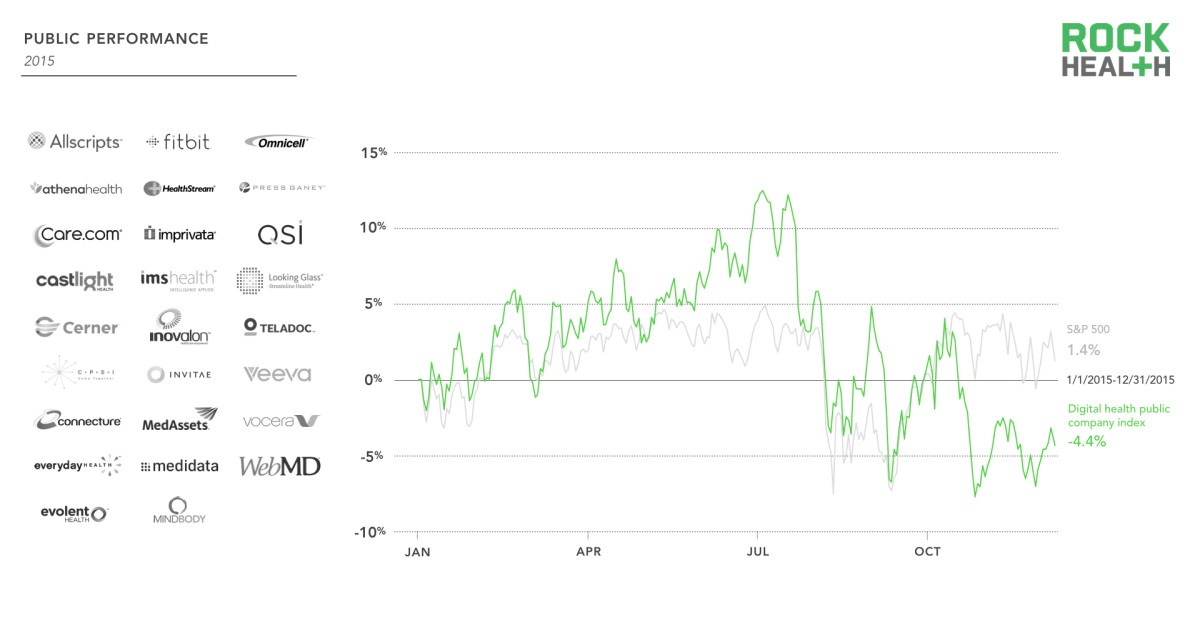
Publicly-traded digital health companies did not fare well even when compared to the public market’s overall performance.


Source: The Digital Health Public Company Index by Rock Health (as of market close on December 8, 2015); Available from: https://www.motifinvesting.com/motifs/the-digital-health-index-by-roc-O7xghiOF#/


Summary

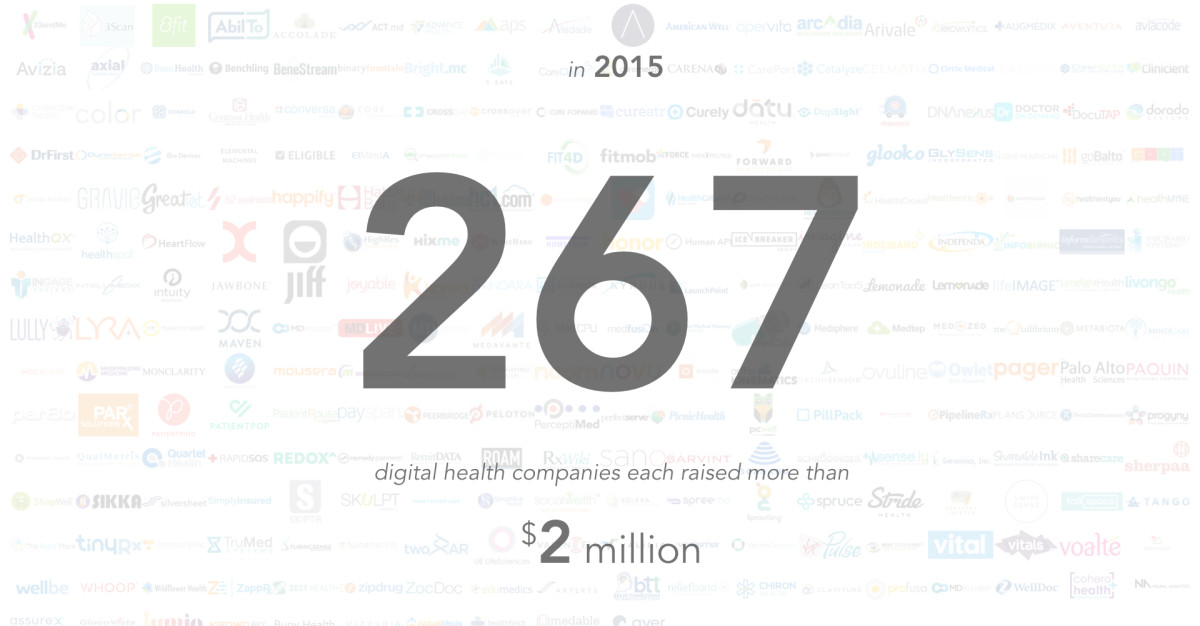
Venture funding for digital health companies in 2015 raised $4.5B, passing 2014. This represents a compound annual growth (CAGR) from 2011-2015 of 32%. There was 302 deals across 267 companies, closing with a slight new record average deal size of $14.8M.
Major themes The top six themes of the year that received 50% of all funding included: healthcare consumer engagement, wearables and biosensors, personal health tools and tracking, payer administration, telemedicine, and care coordination. Payer administration joined the top six for the very first time this year, and personal health tools and tracking and care coordination joined for the first time since 2012.
Growth categories Three areas that experienced noticeable growth in funding: personal health tools and tracking, care coordination, and life sciences technologies. As the industry faces growing pressure to cut costs, digital health will play a key role in enabling engagement with the end-user and improving communication and coordination.
Prolific investors Digital health continues to attract the attention of investors, with an growing tail of investors who participated in at least one deal. Over the past five years, the most active digital health investors have remained stable and diverse. Fourteen venture firms and ten strategic / corporate funds participated in at least four digital health deals each in 2015.
Exits activity In 2015 there were a flood of M&A transactions, with 187 tracked and disclosed deals valued at over $6B. Digital health companies continued to be the most active acquirers, with technology coming in second. Public markets remained a viable exit with over $8B in current market capitalization created through five digital health IPOs.

Montag, 11. Januar 2016

8 Digital Health Startup And Investment Trends We’re Watching In 2016

 Source: CBInsights
Funding will shift overseas, corporate activity and partnerships will increase, and more trends looking forward to the rest of 2016.
Digital health startups attracted $5.8B in funding in 2015, and deal activity to the space jumped 20%. With 2016 underway, we used the CB Insights database to highlight some of the trends that will shape this hot industry in the coming months.
(Digital health includes companies that use software or data to improve efficiency and outcomes in healthcare; it includes health wearables, EHR companies, healthcare software, digital therapeutics, etc.)

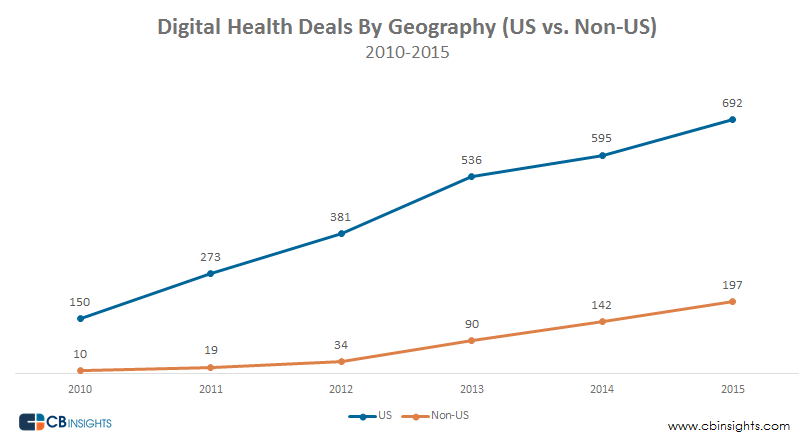
1. There will be a marked increase in digital health funding outside of the US

Digital health companies face heavy regulatory issues in the US, but those same obstacles are less of an issue in many other parts of the world. Especially in developing countries like India and China — which have incredibly high patient-to-doctor ratios — the need for digital health solutions is more acute. We’ve already seen some notable funding deals such as Practo ($90M Series C) and Guahao ($394M Series D), but we should expect to see an increase in 2016 especially in telemedicine and medical back-office tools (scheduling, revenue cycle management, etc.)
Digital Health Geography 

2. Tech giants will form more healthcare partnerships (pharmaceuticals, medical device makers, etc.)

We’re already seeing more involvement of large tech companies in healthcare, including IBM (partnership with CVS), Google (partnership with Novartis) and Apple (integration with Epic). The tech giants can apply their resources in terms of computing power, artificial intelligence, and cloud software expertise as more healthcare data is created and needs to be processed (examples include wearable data processing, computer simulations for clinical trials, and medical journal synthesis). The tech giant’s partners in the healthcare space will bring their scientific expertise and knowledge of the complex regulatory and commercial landscape. Additionally, tech hardware giants (especially in the chips and semiconductor industries) such as Qualcomm may find opportunities in powering a new wave of medical devices.

3. The hype around consumer wearables will cool, but condition-specific and enterprise health wearables will thrive

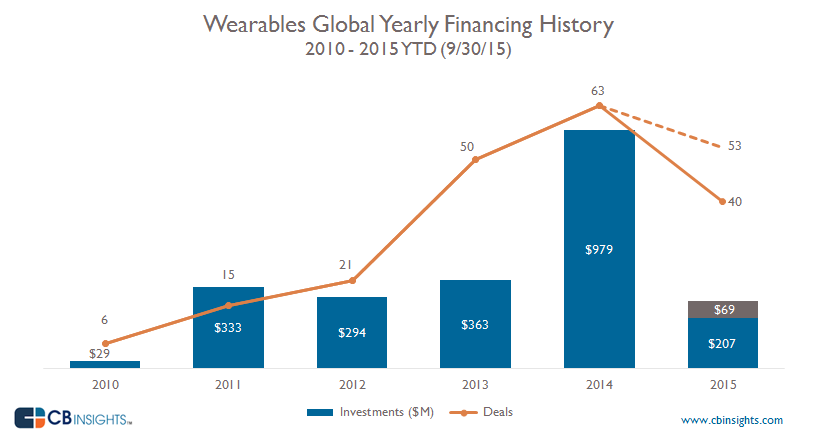
Wearable startup funding has already cooled in 2015. The direct-to-consumer wearables market has been plagued with low adoption and high abandonment (with the possible exception of Fitbit), but a large opportunity exists in the healthcare space for condition-specific and enterprise wearables aimed at physicians and other medical professionals. Diabetes management wearables have already seen a lot of interest (e.g. big players like Google are active in the space, as well as startups like Sano Intelligence), and we can expect to see more funding and focus into wearables targeting other specific conditions. Some examples that have received funding so far have been Chrono (addiction), ZetrOZ (pain management), and Owlet (baby monitoring). We will also see several enterprise wearables receive funding this year that help doctors, especially in hands-free scenarios (surgery, dentistry, etc.). One such wearable company is Augmedix.
WearableDealGlobalFinal4

4. As consumers generate more of their own data, out-of-hospital EHR data platforms will aggregate the disparate data points

Patients are generating more of their own data thanks to wearables, home diagnostic tests, genome sequencing, etc. Slow-moving EHR (electronic health records) platforms have not yet adopted systems to integrate this out-of-hospital data, leaving open territory for new entrants. Effectively integrating data from out-of-hospital sources should also allow doctors to identify behavioral or environmental factors in patient health, better understand how different diseases and conditions are interrelated (co-morbidity analyses), and drive better outcomes. This will also allow hardware companies to focus on their products instead of the platforms and software behind it. Doctors don’t want to see a constant “firehose” of raw data generated by medical devices, so software companies will manage it and reduce the information overload that doctors would face.

5. More pharma and health insurance corporates will set up VC arms to invest in fledgling companies

As corporate investors search for new opportunities and sources of innovation, digital health has a bull’s eye painted on it’s back. Many of the top executives from a range of industries, including pharma, tech, and insurance have talked about the vast importance of digital health and we’ve already seeing more corporates set up investment arms to make sure they’re capturing value from this wave of disruption. A symbiotic relationship is formed where corporations can outsource R&D and complement their core businesses by investing in smaller companies, while they also provide necessary resources and connections to the startups themselves.
Pharma-overall (1)

6. Digital health startups will target “wellness” budgets of employers, and be better incorporated into employee plans

As health insurance premiums increase, employers are looking for ways to reduce their costs. Many are expanding their employee wellness budgets and promoting preventive measures to keep their employees out of hospitals. Large companies are providing mental health coaching and fitness trackers to their employees. In addition, many wellness perks are said to trigger increases in work productivity, which is an important benefit beyond the reduced premiums. We can expect to see more companies expand their corporate wellness programs for this reason, as well as using more healthcare focused perks as a recruitment tool (e.g. Facebook’s “egg-freezing” program for women). Some startups taking advantage of this trend are Keas,ShapeUp, and WellTok.
aflack-wellness-1-620x470

7. Late-stage funding contractions means we’re going to see more digital health IPOs

We’ve identified 34 digital health companies on our Tech IPO pipeline list, alongside 6 digital health companies valued above a billion dollars (Zocdoc, Proteus Digital Health, 23andMe, NantHealth, Oscar, and GuaHao), many of which will need to go to public markets for further funding if late-stage investors continue to move further away from private markets as they did in Q4’15 (this may be a trend that’s particularly pronounced in healthcare, where companies have much longer time horizons for returns). We’ve dubbed this the “dragged-to-IPO” phenomenon. Many have reached valuations that limit the universe of larger companies that might consider them attractive M&A targets.
Digital Health Exits Over TIme

8. Problems that plague tech startups will become more pronounced in digital health companies

Some of the biggest trends and issues that we’re seeing in the general tech startup space are prominent in digital health companies; specifically when it comes regulatory issues, unit economics, and winner-take-all markets.
  • Regulatory issues: While tech is seeing many regulatory battles (W-2 issues, brokerage laws, etc.), many companies choose the “do first, ask questions later” approach to these laws. This is a riskier strategy for digital health companies, which face stringent FDA and HIPAA regulations, as well as the fact that patients’ lives are on the line.
  • Unit economics: Digital health companies will struggle with unit economics much as tech startups do when they find their unprofitable business models don’t always necessarily flip in a positive direction at a certain scale or price point. This is particularly true for digital health plays in the direct-to-consumer and on-demand space, where reimbursement is still murky, distribution and marketing costs are high, and patients are not used to paying out-of-pocket.
  • Winner-takes-all: Finally, many hot areas of tech eventually see clear winners due to network effects, first mover advantage, etc., leaving little room for new entrants. This tendency is even more pronounced in digital health where first movers can get through the FDA process, gather outcomes data to prove their effectiveness to potential customers, and have sticky customers that face high switching costs once they’re integrated into a system.

Montag, 4. Januar 2016

Tricorder Innovation News: A diagnostic device under development that has the potential to change the way healthcare is delivered

Tricorder X Prize competition pushes back deadline, loosens requirements

Source : mobihealthnews.com

Remarks BB: One of the most watched and inspiring innovation field in easy to use, personal health care diagnostic

The Qualcomm Tricorder X Prize has extended its deadline and tweaked the requirements for its seven remaining finalists, the group announced last month. Launched in 2013, the Tricorder X Prize is a $10 million competition to build a self-contained, handheld device for consumers that can diagnose a number of diseases and check several vital signs.
“The accomplishments the teams have made so far in this competition are nothing short of remarkable; the prototypes they delivered are perhaps some of the most intricate diagnostic devices under development today and have the potential to change the way healthcare is delivered,” Tricorder X Prize Director Grant Campany said in a statement. “Because of the advanced level of technology required to achieve success in this competition, and to ensure the finalists have enough time to refine their tricorders, we decided to add a second phase of consumer testing and extend the competition.”
The prize was originally set to be given out in 2016, partly to coincide with the 50th anniversary of Star Trek, from which the “tricorder” name derives. Now winners are set to be announced in early 2017, with phase two of consumer testing set to begin in September 2016.
The contest organizers have also eliminated tubercolosis, hepatitis A, and stroke from the list of 16 conditions devices are required to detect. Campany said this decision was made “to keep pace with current epidemiology, as well as to reduce risk of contagion to the testers”.
Ten finalists were announced in August 2014 out of an original slate of 34 teams. Now that number is down to just seven.
As we reported in April, Intelesens and Scanadu merged into a single team while Slovenian team MESI Simplifying Diagnostics dropped from the competition, in order to focus more fully on commercialization of its product.
A few months later, Scanurse also dropped out of the competition, but not by choice. According to a blog post, the UK company’s prototype was held up in customs and they weren’t able to deliver it by the deadline.
“As of today, Scanurse is no longer part of the XPRIZE competition,” the company wrote on June 5th. “Of course we are disappointed, especially since this was caused by circumstances beyond our control. But that doesn’t mean we aren’t still in the global game of helping to change healthcare for the better. Scanurse will continue to push forward with what we’ve learned and built, with some modifications based on better flexibility outside the competition framework.”
The remaining teams are Scanadu-Intelesens, Aezon, CloudDX, Davantri, DMI, Dynamical Biomarkers Group, and Final Frontier Medical Devices.